


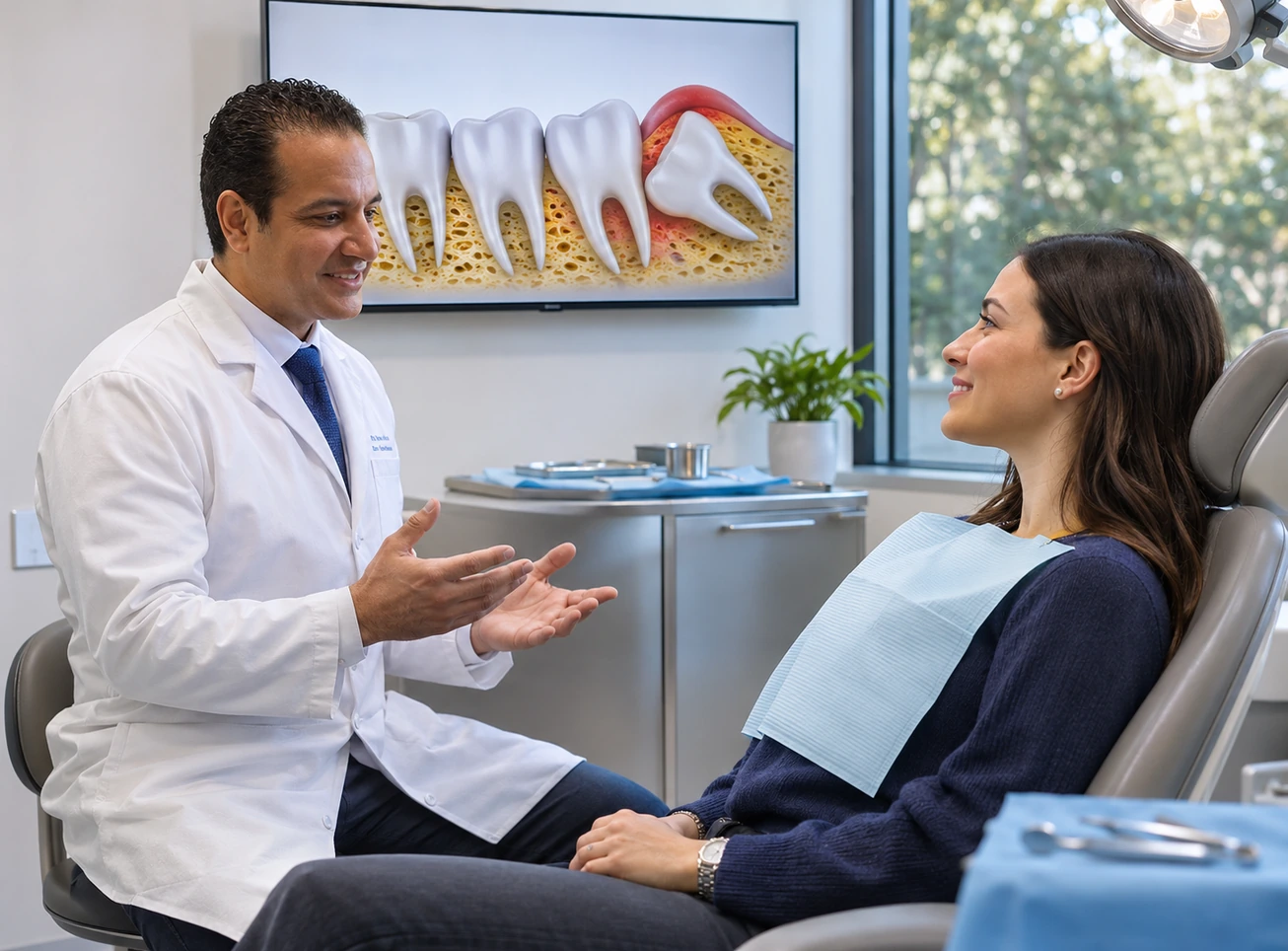
WISDOM TEETH CARE | SERVING SAN PABLO FROM PINOLE
Wisdom Teeth Removal Near San Pablo, CA
Wisdom tooth discomfort can interrupt meals, sleep and everyday life. If you are looking for wisdom teeth removal near San Pablo, CA, Albany-Pinole Oral & Maxillofacial Surgery offers third-molar evaluations and treatment at its nearby Pinole office. We examine how your wisdom teeth are developing, explain whether removal or monitoring makes sense, and discuss anesthesia and recovery before you decide.
Third-molar care for San Pablo patients at our Pinole office
THE SHORT ANSWER
Wisdom Teeth Removal Near San Pablo: What to Know
Wisdom teeth are the third molars at the back of the mouth. Some erupt normally and remain healthy, while others are impacted, hard to clean, painful or associated with disease. An oral and maxillofacial surgeon reviews symptoms, oral health and imaging to decide whether monitoring or extraction is appropriate. San Pablo residents can arrange an evaluation at Albany-Pinole Oral & Maxillofacial Surgery in Pinole.
- What is evaluated
- Wisdom tooth position, eruption, nearby teeth and gum health
- Possible recommendations
- Monitoring or removal based on examination and imaging
- Common concerns
- Pain, swelling, infection, decay and impacted teeth
- Comfort planning
- Discuss local anesthesia and sedation options when appropriate
- Recovery
- Plan soft foods, rest and surgeon-specific instructions
- Office
- 1330 Tara Hills Dr., Suite 206, Pinole, CA 94564
- Phone
- (510) 392-8200
SIGNS TO DISCUSS
Should Your Wisdom Teeth Be Evaluated?
A painful wisdom tooth does not always mean surgery, and a painless one is not automatically healthy. Consider an evaluation if any of these concerns sound familiar.
Select any concerns to prepare for your consultation.
This checklist cannot diagnose an impacted tooth or determine the need for surgery. A dental examination and imaging are required.
REQUEST AN APPOINTMENT
Book a Wisdom Teeth Evaluation in Pinole
Call (510) 392-8200 or contact the office to ask about a third-molar consultation. Mention any dental referral or prior X-rays, and ask which records to bring. Your appointment takes place in Pinole, not San Pablo.
Request a Wisdom Teeth ConsultationTHIRD MOLARS EXPLAINED
What Are Wisdom Teeth and Impacted Third Molars?
Wisdom teeth are the last molars to develop, often emerging during the late teens or early twenties. Some come through the gums in a position that allows normal chewing and cleaning. Others remain beneath the gum or bone, come through only partway, or grow at an angle. These situations are commonly described as impaction. An impacted tooth can be difficult to clean and may affect nearby gum tissue or teeth.
Not every wisdom tooth needs extraction. If the tooth is healthy, fully erupted, functional and easy to maintain, professional monitoring may be appropriate. However, pain, infection, tooth decay, gum disease, damage to a neighboring tooth or concerning findings on an X-ray can change the recommendation. The AAOMS wisdom teeth management guide provides independent information about how these decisions are made.
AAOMS wisdom teeth management guide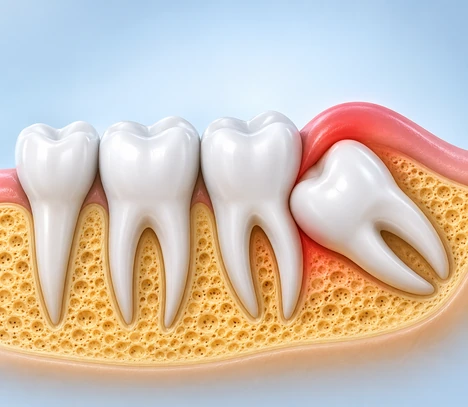
Tooth position
Is the third molar erupted, partially erupted or impacted?
Surrounding health
Consider gum inflammation, decay, adjacent teeth and imaging.
Individual decision
Discuss monitoring, extraction and anesthesia based on findings.
MONITORING OR REMOVAL
When Might Wisdom Teeth Removal Be Recommended?
The decision is made tooth by tooth. Here are common findings that help guide the discussion, rather than a fixed rule that everyone needs surgery.
Healthy and Erupted
May be monitored- What it means
- A fully erupted wisdom tooth that is cleanable, functional, and free of decay or gum disease may not need immediate removal.
- Evaluation focus
- Routine professional checks and imaging when indicated
- Ask your surgeon
- Is keeping this tooth a reasonable option?
Partially Erupted
Gum irritation or infection- What it means
- A partly erupted third molar can leave a gum flap that traps food and bacteria. Repeated irritation or infection can make removal appropriate.
- Evaluation focus
- Gum health, cleaning access and recurrence
- Ask your surgeon
- Is monitoring likely to be sufficient?
Impacted or Damaged
Surgical planning may be needed- What it means
- A wisdom tooth trapped under gum or bone, decayed, or affecting a second molar may require removal. Imaging helps assess position and nearby anatomy.
- Evaluation focus
- Position, adjacent teeth, nerve proximity and treatment risks
- Ask your surgeon
- What is the safest approach in my case?
WHAT YOUR EVALUATION CLARIFIES
Six Questions a Wisdom Tooth Consultation Can Answer
A useful visit should help you understand why treatment is being considered, whether there are alternatives and what the experience may involve.
Is removal necessary?
Discuss whether each wisdom tooth should be observed or extracted.
Are the teeth impacted?
Review eruption patterns and what imaging reveals.
What could happen if I wait?
Discuss relevant risks of continuing to monitor the teeth.
Which anesthesia suits my case?
Consider the procedure and personal medical history.
How should I prepare?
Review food, transportation and preoperative instructions when sedation is planned.
What does recovery involve?
Clarify expected swelling, activity limits, oral care and follow-up.
Evaluation and treatment recommendations vary. No surgery, specific anesthetic, recovery duration or result is guaranteed.
FROM EVALUATION TO HEALING
Your Wisdom Teeth Evaluation and Treatment Process
- 01
Talk through symptoms and goals
Share discomfort, previous dental advice, medications, medical history and any concerns about anesthesia.
- 02
Review X-rays and tooth position
The surgeon evaluates impaction, surrounding teeth, available space and important anatomy. Further imaging may be recommended when needed.
- 03
Discuss removal or monitoring
You will learn whether a tooth can be observed or whether extraction is recommended, with reasons and alternatives.
- 04
Plan anesthesia and preparation
Discuss local anesthesia and appropriate sedation options, along with fasting or escort instructions when relevant.
- 05
Complete removal if recommended
The approach depends on each tooth. Some can be removed routinely; impacted third molars may require surgical access.
- 06
Recover and follow up
Protect the blood clot, follow eating and cleaning instructions, and contact the office about unusual symptoms.
RECOVERY QUESTIONS
What Happens During the First Days After Removal?
Mild bleeding, swelling, jaw soreness and temporary limits on chewing can occur after wisdom tooth surgery. The first priority is protecting the blood clot that forms at the extraction site. Follow the surgeon’s directions for gauze, food, fluids, mouth care and activity. Plan for someone to drive you if your anesthesia instructions require it.
Drink from a cup rather than using a straw at first, avoid smoking, and choose gentle foods while healing. The practice provides a dedicated wisdom tooth extraction recovery guide. Contact the office if bleeding does not settle, symptoms worsen or you are concerned about healing. Severe trouble breathing or swallowing requires emergency medical care.
Everyone has their wisdom teeth removed at the same age.
Timing depends on eruption, symptoms, imaging and individual clinical needs.
If a wisdom tooth does not hurt, it is always healthy.
Some problems are detected during dental examination or imaging before pain starts.
Normal eating resumes immediately after surgery.
Most patients begin with softer foods and advance gradually according to the surgeon’s guidance.
PLANNING FOR TEENS AND ADULTS
Who Should Consider a Wisdom Tooth Consultation?
Teenagers, young adults and older patients may all have reasons to ask about third-molar management. A referral is helpful when available, but an assessment is still required to decide what is appropriate.
Reasons to arrange an evaluation
- A dentist reports one or more impacted third molars
- Recurring pain or inflamed gum tissue behind a molar
- Decay or cleaning difficulty around a wisdom tooth
- Questions about timing for a teen or young adult
- Concern about a wisdom tooth affecting a neighboring tooth
Things to discuss before surgery
- Current medications and medical conditions
- Previous anesthesia experiences or allergies
- Dental imaging and referral information
- Time needed away from school, work or activities
- Transportation and support after sedation
The presence of a wisdom tooth alone does not establish the need for surgery. Each recommendation should follow an examination and review of imaging.
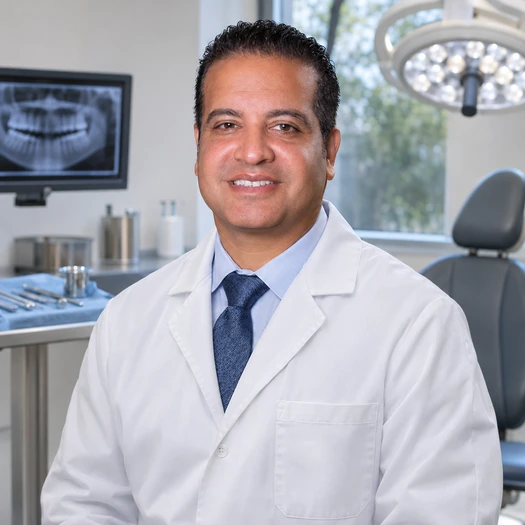 Pinole oral surgery team
SPECIALIST CARE IN PINOLE
Meet the Albany-Pinole Oral Surgery Team
Albany-Pinole Oral & Maxillofacial Surgery provides third-molar evaluations and wisdom tooth removal at its Pinole office. The practice website identifies Dr. Adel S. Khalil, DDS, MD, and a team of oral surgeons. Confirm the clinician and appointment details with the office when scheduling.
Your consultation is an opportunity to review the X-rays together, ask why removal is recommended, understand anesthesia choices and discuss what recovery may involve. Patients and parents are encouraged to bring questions, especially when this is a first surgical experience.
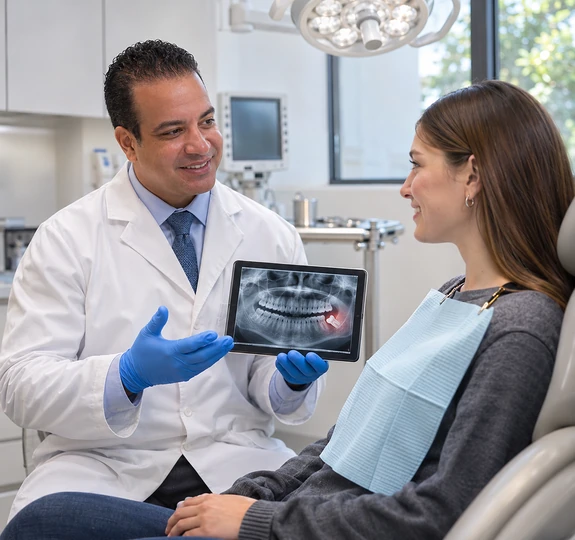
Reviewing dental X-rays with a patient at our Pinole office.
PRACTICAL APPOINTMENT PLANNING
Insurance, Scheduling and Preparation for Removal
Before your visit, ask which X-rays, referral notes, medical history details and insurance information the office needs. Your surgical plan may vary with the number of teeth, their positions, imaging and anesthesia considerations.
Costs and coverage depend on the recommended care and your individual benefits. The office can review available information and provide an estimate after evaluation. Confirm current financing and insurance arrangements directly with the practice rather than relying on general online cost figures.
Insurance and Scheduling
No insurer participation or financing terms are promised on this page.
Ask About Payment Information
Call the office for current insurance and payment information specific to your visit.
Patient information and insurance detailsWISDOM TEETH FAQS
Wisdom Teeth Removal Questions From San Pablo Patients
No. Healthy, fully erupted, functional wisdom teeth may be monitored. Your surgeon evaluates symptoms, gum health, tooth position and imaging before recommending removal.
An impacted wisdom tooth is unable to erupt normally through the gum. It may be partly covered by gum or remain within the jawbone.
An evaluation during the teenage years can help identify developing third molars. Timing for removal or monitoring depends on findings, not age alone.
Yes. Eruption pressure, gum irritation or nearby tooth problems may cause discomfort. An examination is needed to identify the cause.
Not necessarily. The surgeon will explain local anesthesia and available sedation or general anesthesia options based on the procedure and your medical history.
Procedure length depends on how many teeth are treated and their positions. Your surgeon can give a better estimate after reviewing imaging.
Sometimes. Whether to remove one, several or all four teeth in one visit depends on the clinical findings and treatment plan.
Soft foods and fluids are commonly recommended early in recovery. Follow your surgeon’s instructions and avoid foods that irritate the surgical areas.
Call about worsening pain, uncontrolled bleeding, fever, increasing swelling or other concerns. Trouble breathing or swallowing requires emergency medical attention.
No. Albany-Pinole Oral & Maxillofacial Surgery serves San Pablo patients from 1330 Tara Hills Dr., Suite 206, Pinole, CA 94564.
WISDOM TEETH CARE FOR SAN PABLO PATIENTS
Visit Our Pinole Office for Wisdom Teeth Care
Searching for wisdom teeth surgery in San Pablo? Albany-Pinole Oral & Maxillofacial Surgery serves San Pablo residents from its office at 1330 Tara Hills Dr., Suite 206, Pinole, CA 94564. Call (510) 392-8200 to discuss consultation scheduling, referral paperwork and your next step. This practice does not have a San Pablo office.
- Pinole office serving San Pablo patients
- Impacted and erupted wisdom tooth evaluations
- Anesthesia and treatment planning conversations
- Written aftercare and follow-up information
Albany-Pinole Oral & Maxillofacial Surgery
1330 Tara Hills Dr., Suite 206Pinole, CA 94564
(510) 392-8200
- Monday to Friday
- 8:00 AM to 5:00 PM
Confirm current hours and appointment availability.
San Pablo patients visit the Pinole office
Patients also visit from Pinole, Richmond, Hercules, El Sobrante and other nearby West Contra Costa County communities.
Educational information only. A personal examination is required to decide whether removal is needed. Difficulty breathing or swallowing requires emergency medical attention.