
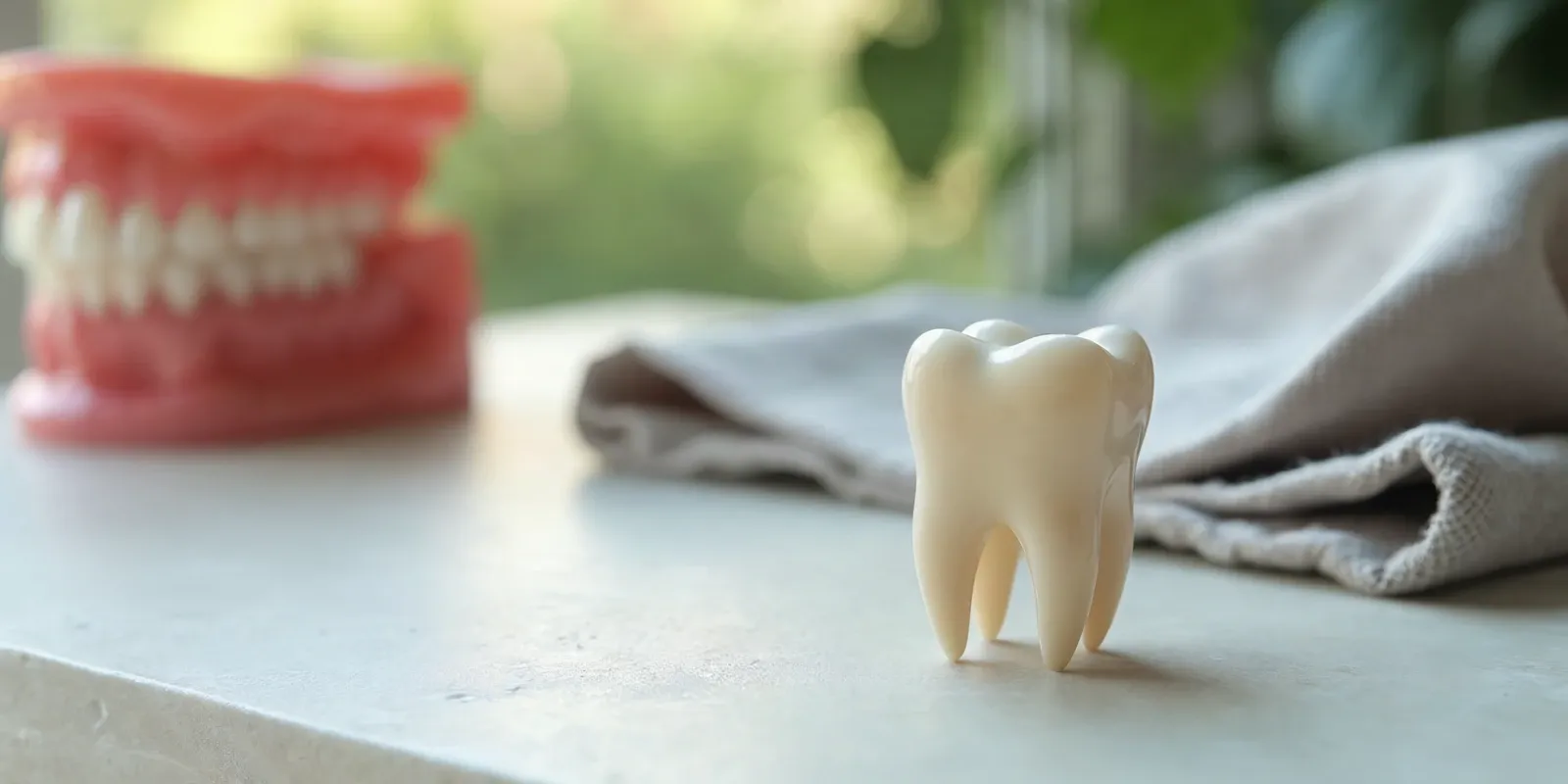
What It Means When Wisdom Teeth Are Impacted
Dr. Adel S. Khalil
November 6, 2026
If you have been told you have impacted wisdom teeth, that usually means the teeth do not have enough room to come in the normal way. In this post, we explain what that term means, the common types of impaction, and how symptoms and x-rays help guide the next step at Albany Pinole Oral & Maxillofacial Surgery in Pinole.
Wisdom teeth are the last set of molars, and they often show up in the late teens or early twenties. The wisdom teeth service page gives an overview of how Dr. Adel S. Khalil evaluates them, while this article focuses on what “impacted” really means in plain language.
Many people hear the word and assume it automatically means pain or surgery. That is not how it works in every case, and the exam at the practice is what helps show whether a tooth is partly erupted, fully trapped, or simply positioned in a way that needs a closer look.
What impaction means in everyday terms
An impacted wisdom tooth is one that cannot erupt fully into its normal place, or can only come in part. The tooth may be blocked by the jaw, by another tooth, or by the angle it is growing at, and that is why the gum can look normal while the tooth is still not positioned correctly beneath the surface.
People often notice this only after a routine x-ray or after a back tooth starts feeling tight, tender, or hard to clean. The phrase can describe several patterns, and the exact shape of the impaction matters because a tooth that is tilted toward the next molar behaves differently from one that is stuck under gum and bone.
At Albany Pinole Oral & Maxillofacial Surgery, Dr. Adel S. Khalil looks at the tooth position, the space around it, and the nearby roots before explaining what the x-rays show. The team then uses that exam to talk through the findings in clear terms so patients from Pinole and nearby communities know what the image actually means.
What counts as an impacted wisdom tooth
Impaction is a position problem, not a diagnosis by itself. A wisdom tooth becomes impacted when the path it needs to erupt is blocked or too narrow, so the tooth remains partly or fully below the gum line instead of settling into the bite like a regular molar.
The American Dental Association’s guide to wisdom teeth explains that wisdom teeth may fail to erupt normally because there is not enough room, they are angled sideways, or they are trapped against nearby teeth or bone. That is why the same word can cover several different tooth positions.
That means the term does not tell the whole story. One impacted tooth may sit quietly for years, while another may press against the second molar, collect food under a gum flap, or create a pocket that is hard to keep clean.
The common types of impaction
When people ask what impacted wisdom teeth mean, they are usually asking how the tooth is stuck. Oral surgeons often describe the position by the way the crown sits and the direction the tooth points, because that helps explain what is happening in the jaw.
Some common patterns include:
- Soft tissue impaction, the tooth has erupted partly, but gum tissue still covers part of it.
- Partial bony impaction, part of the tooth is still in bone, and part has broken through.
- Full bony impaction, the tooth remains completely within bone and has not come through the gum.
- Angled impaction, the tooth grows forward, backward, or sideways instead of straight up.
These labels do not describe pain on their own. They describe where the tooth is and what surrounds it, which is why an advanced imaging visit can be useful when standard x-rays do not give enough detail.
Some impacted teeth stay covered by gum tissue and never create trouble right away. Others are only partly through, which can trap plaque and food near the back of the mouth. In a few cases, the tooth may be upright enough to erupt eventually, but the available space is so limited that it remains partly trapped.
Why wisdom teeth do not always erupt normally
Most people develop wisdom teeth long after the other permanent teeth are already in place. By that stage, the jaw has usually finished growing, so there may be less room left at the very back of the mouth for a new molar to emerge in a straight path.
Genetics, jaw size, tooth size, and the angle of development all play a role. In some patients, the tooth starts out tilted and never has a clear path upward, while in others, the tooth is nearly upright but still lacks enough room to finish erupting.
This is one reason the same person can have one wisdom tooth that comes in normally and another that stays impacted. The tooth’s position, the shape of the jaw, and the space available all have to be read together during the exam, which is where Dr. Khalil can explain the findings in practical terms.
What symptoms can suggest impaction
Some impacted wisdom teeth cause no clear symptoms for a long time. Others make themselves known by creating pressure, gum irritation, or repeated trouble in the far back of the mouth, especially when the tooth is partly erupted and hard to keep clean.
Common signs may include:
- tenderness or pressure behind the second molar
- swollen gum tissue around the back of the mouth
- food trapping near a partly erupted tooth
- jaw soreness when chewing or opening wide
- repeated irritation in the same back area
These symptoms do not tell the whole story by themselves. A sore back tooth can come from gum inflammation, decay on the wisdom tooth or the tooth next to it, or pressure from the way the tooth is positioned, which is why an oral surgeon will usually pair the exam with x-rays before explaining what is actually happening.
How x-rays guide the evaluation
X-rays show what the eye cannot, especially when the tooth is still beneath the gum or bone. They help the doctor see how close the wisdom tooth is to nearby roots, whether it is tilted, and how much room exists around it.
That information matters because an impacted tooth can sit quietly for a while and still be worth watching closely if it is close to other teeth or hard to clean. The exam does not rely on pain alone, since some of the most relevant findings appear before a person feels much at all.
At Albany Pinole Oral & Maxillofacial Surgery, Dr. Adel S. Khalil may use imaging to compare both sides of the mouth, check the position of the third molar, and look for signs that explain why the tooth is not erupting normally. That is usually where the discussion shifts from the word “impacted” to a more specific explanation of what the image shows in that particular mouth.
For some patients, the key finding is simply that the tooth is monitored over time. For others, the image shows a tooth that is partly erupted, tilted, or pressing on nearby structures, and that is the point at which the team can outline the available options in a way that fits the exam findings and the patient’s situation.
“Impacted wisdom teeth are not one single problem, they are a group of tooth positions that need to be read on x-rays and in the exam.”
FAQ
Still have a Question? Contact Us
No. Impacted describes how the tooth is positioned, not the final decision. The exam and imaging show whether the tooth is being watched, causing trouble, or creating a risk for nearby teeth and gum tissue.
Yes. A tooth that is still under the gum or bone can create pressure, tenderness, or swelling before it becomes visible. Some people do not feel much at first, which is why x-rays can find a problem earlier.
A partially erupted tooth has come through some of the way, while an impacted tooth has not erupted normally because something is blocking it or there is not enough space. A tooth can be both partly erupted and impacted at the same time.
The angle helps explain whether the tooth has a clear path to erupt and how it sits near the second molar or jawbone. That detail often changes what the doctor expects to see over time.
Dr. Adel S. Khalil reviews the symptoms, examines the back of the mouth, and studies x-rays or 3D imaging when needed. That combination shows the position of the tooth and the space around it.
Conclusion
When people say a wisdom tooth is impacted, they are usually describing a tooth that cannot erupt in the normal way because of space, angle, or blockage. The term covers several positions, so the real answer comes from the exam and the image, not the word alone.
The next part of this series looks at why impacted wisdom teeth can start hurting without warning. If you are trying to understand your own x-rays, that follow-up can help put the warning signs into context.
If you would like to review your findings with Dr. Adel S. Khalil, contact Albany Pinole Oral & Maxillofacial Surgery to schedule a visit.
More in this series
Disclaimer
This media/content or any other on this website does not prescribe, recommend, or prevent any treatment or procedure. Therefore, we highly recommend that you get the advice of a qualified dentist or other medical practitioners regarding your specific dental condition.